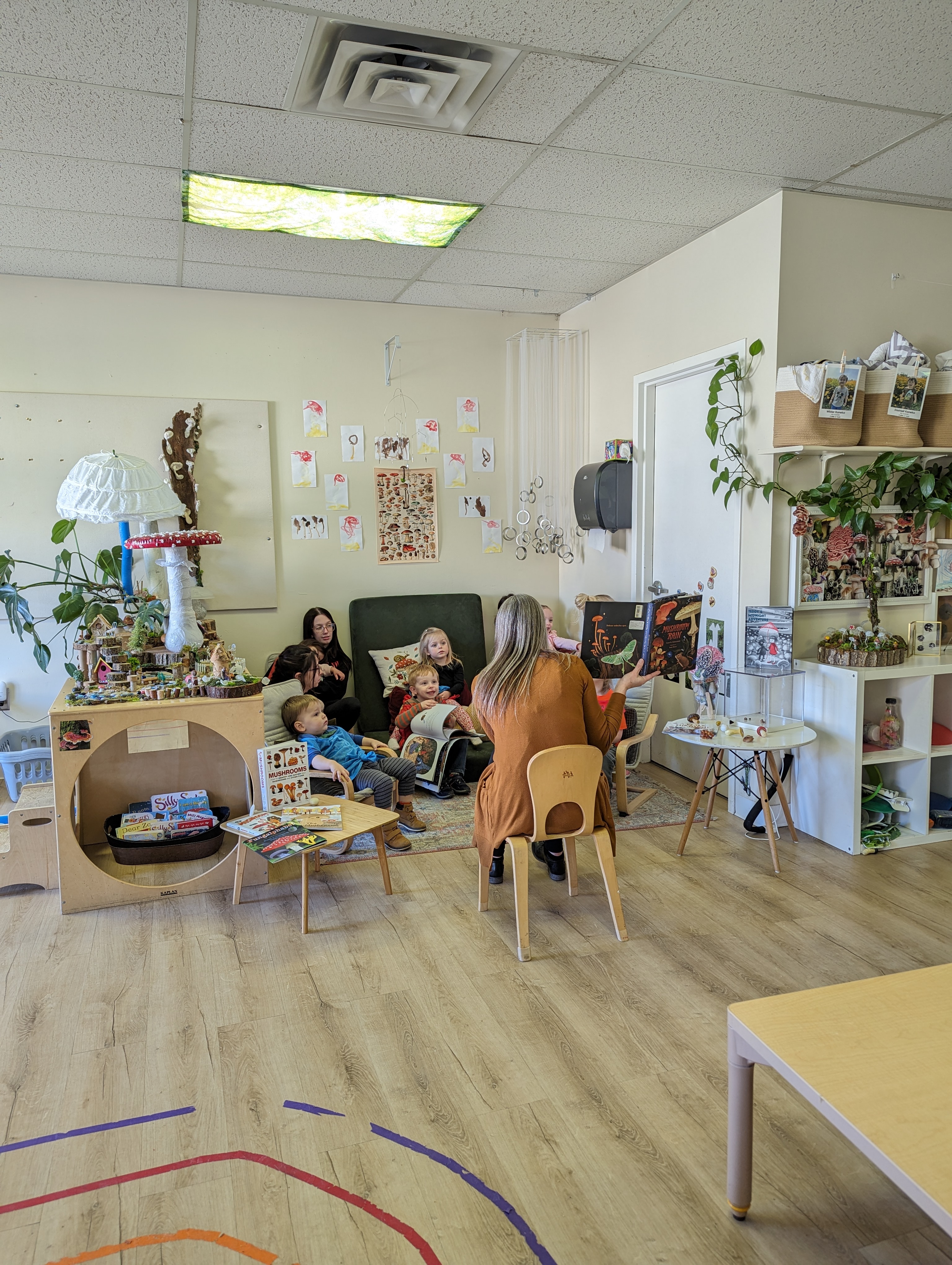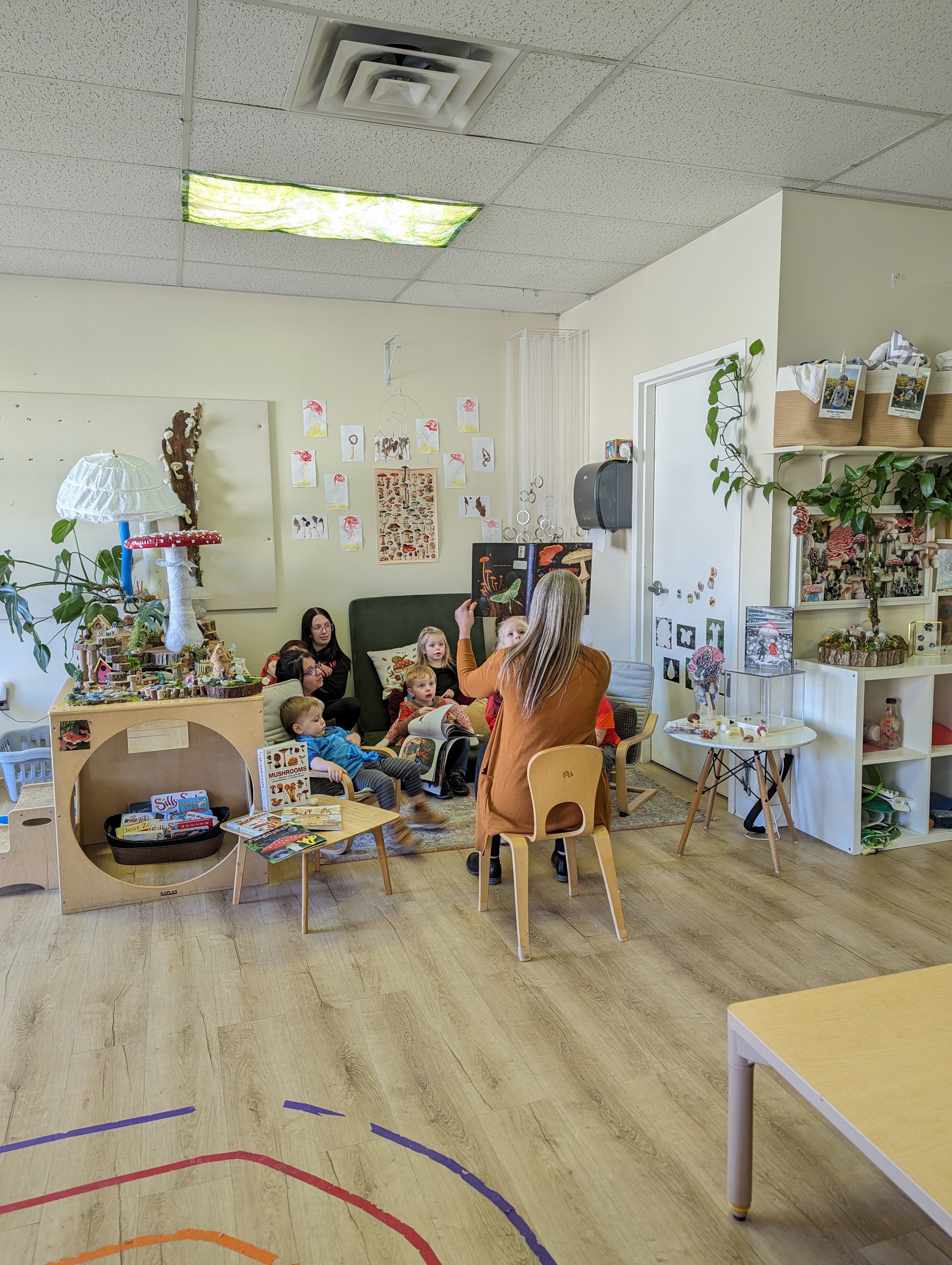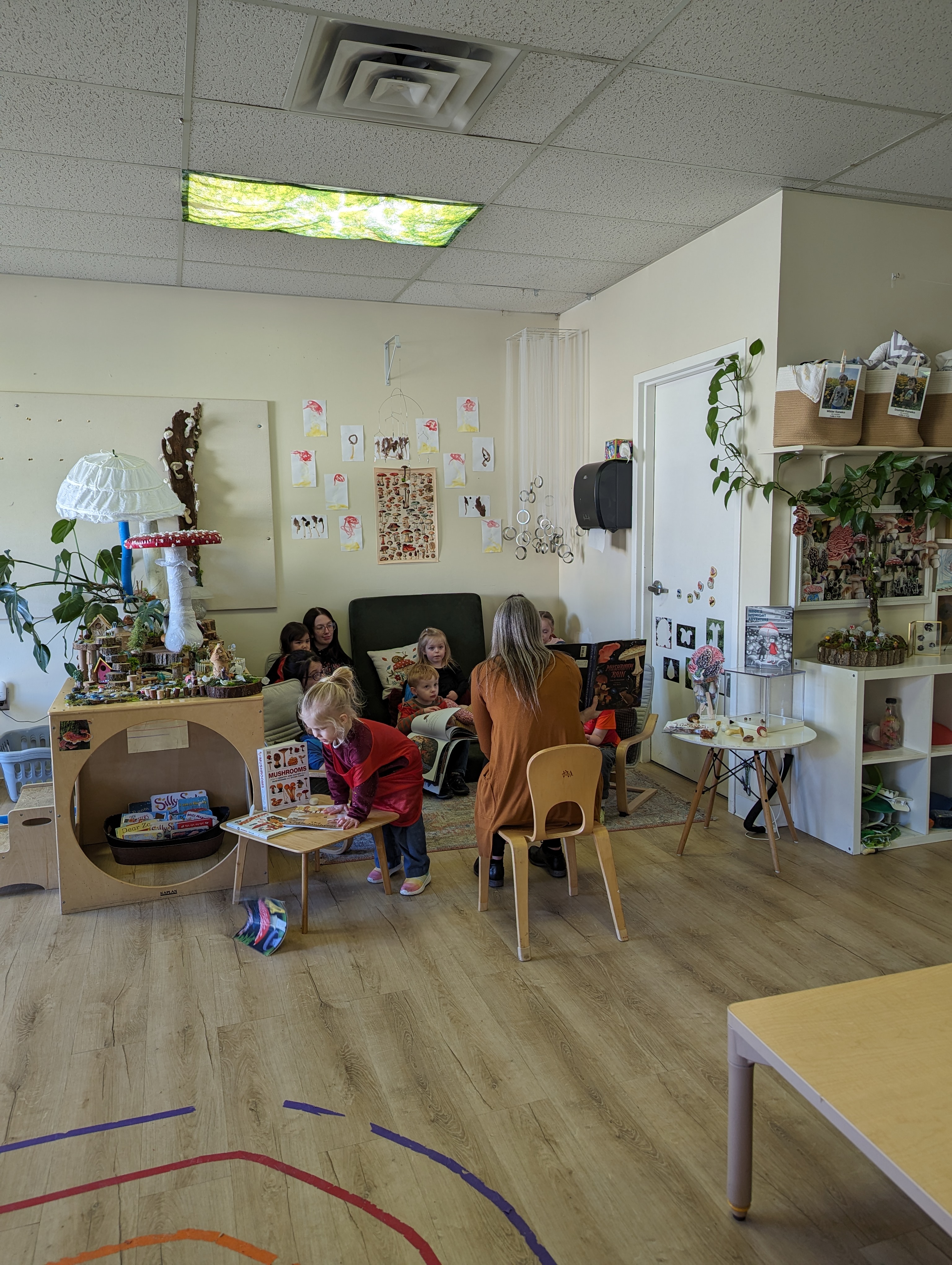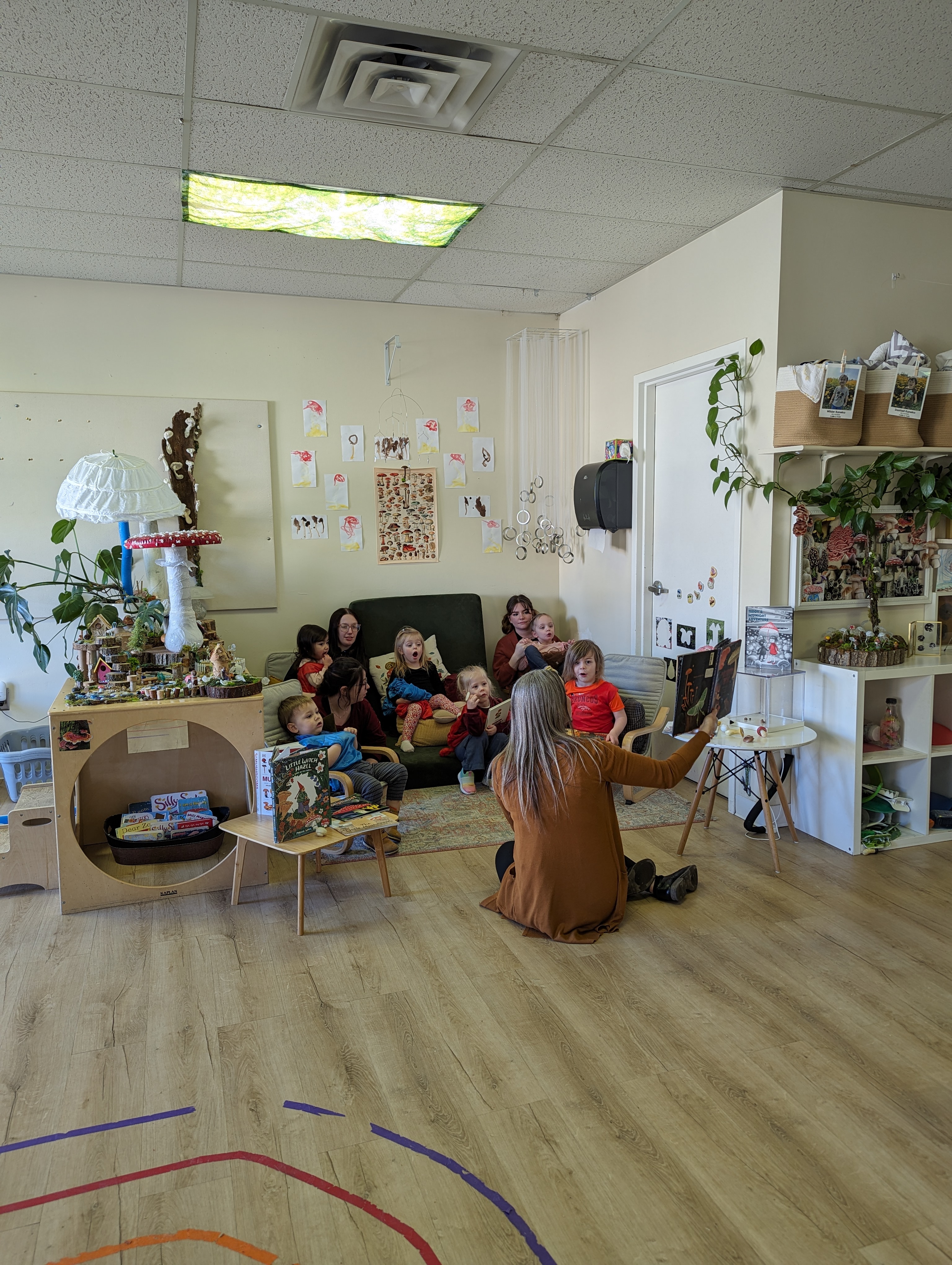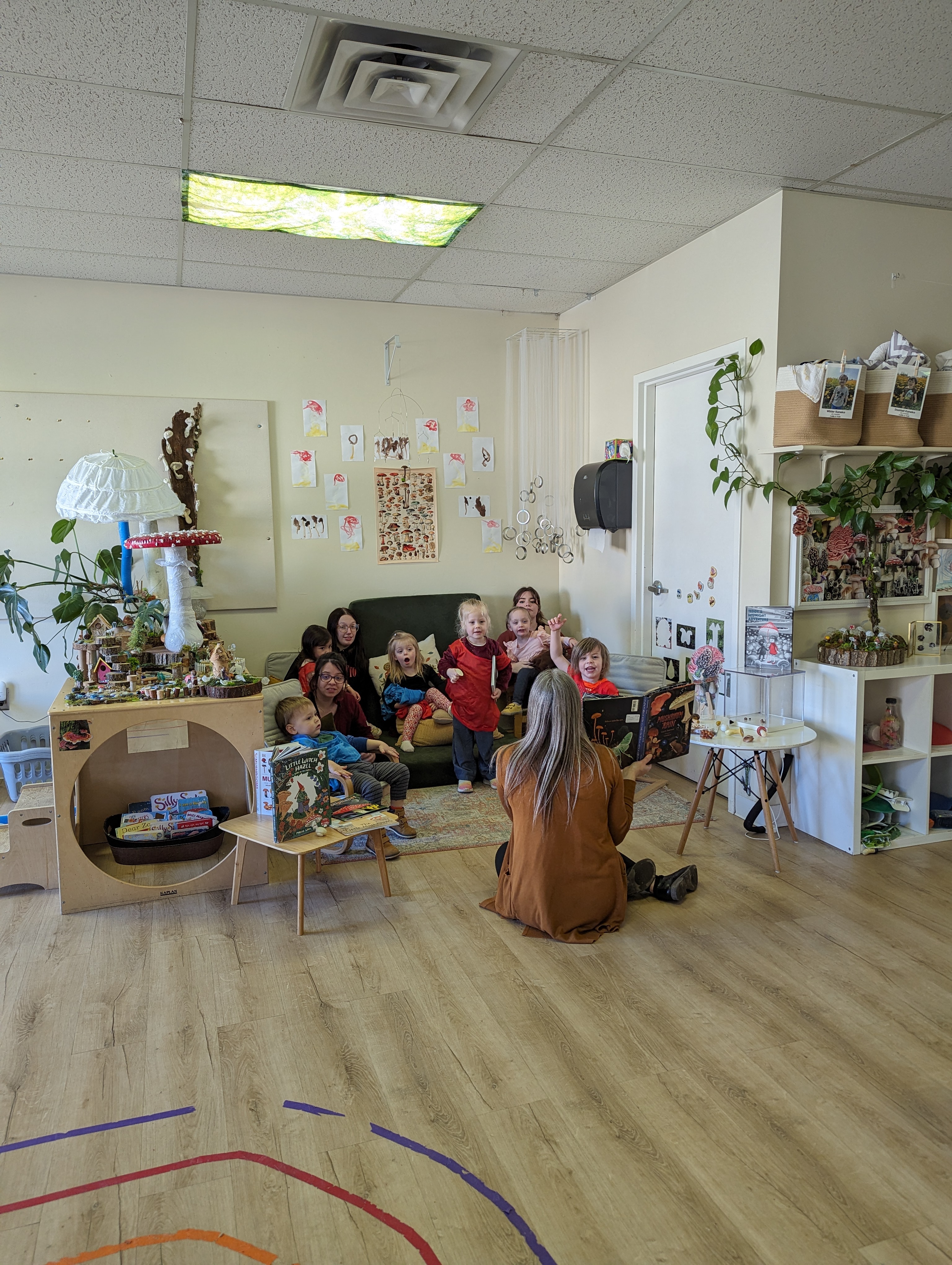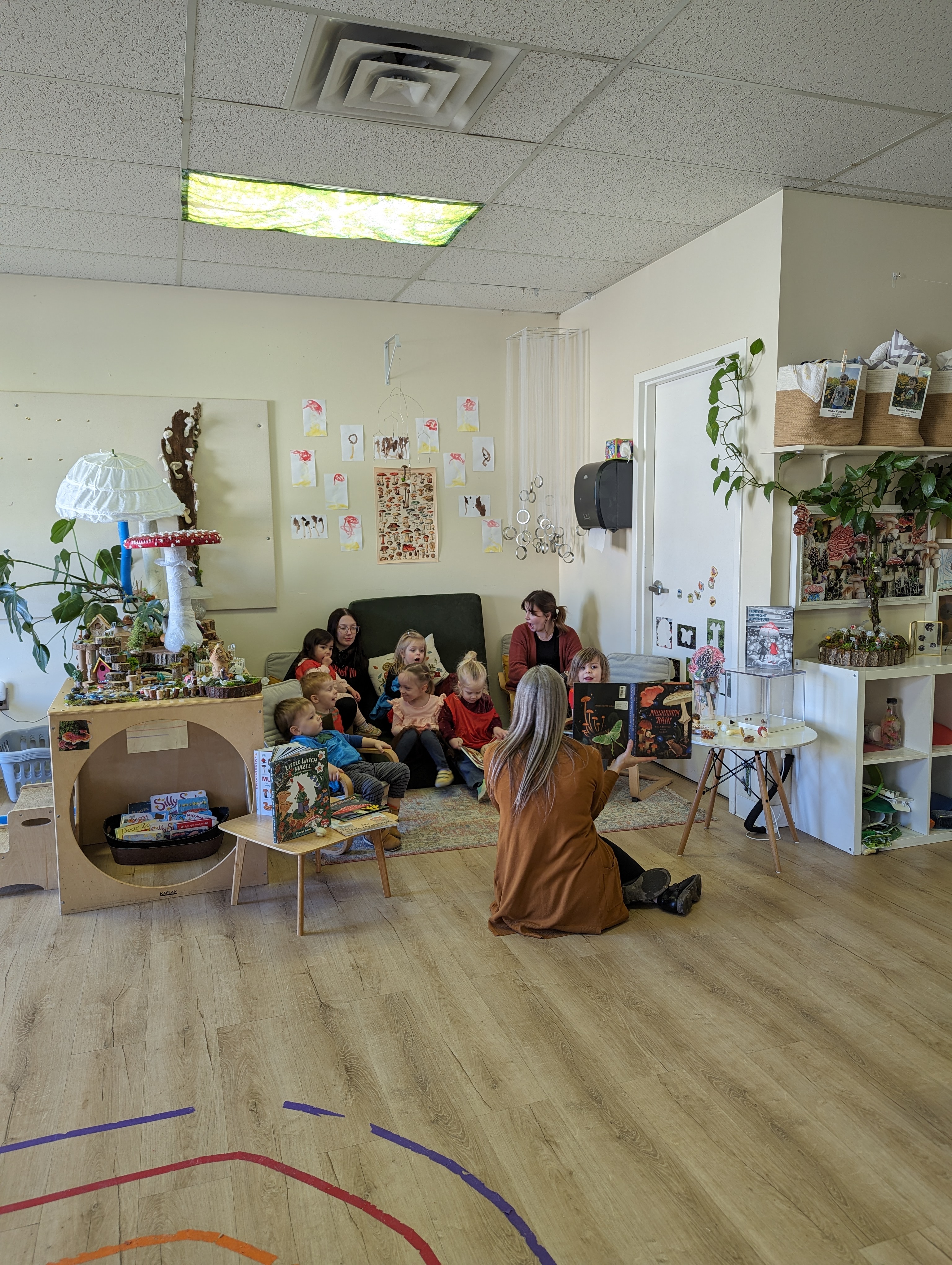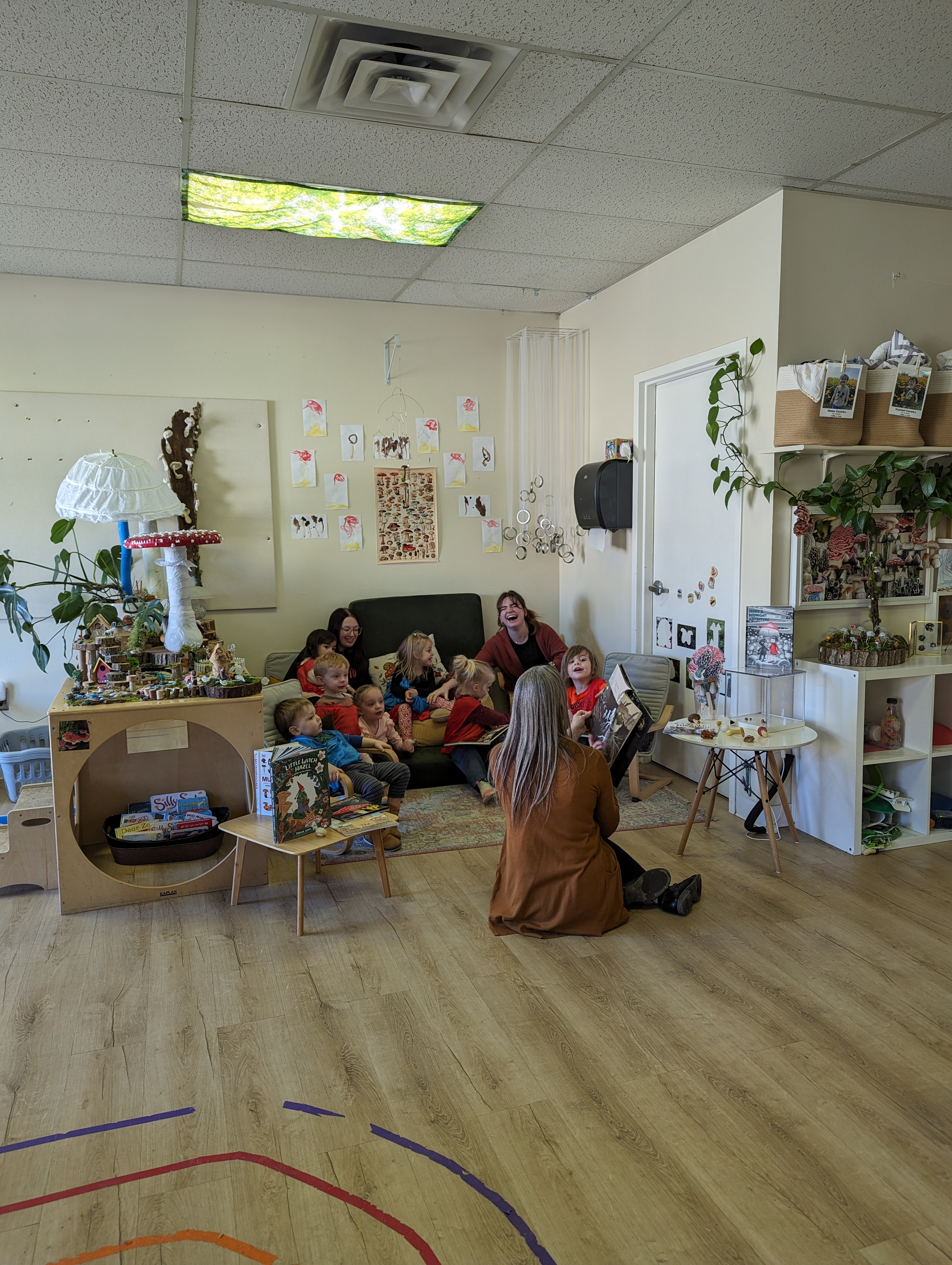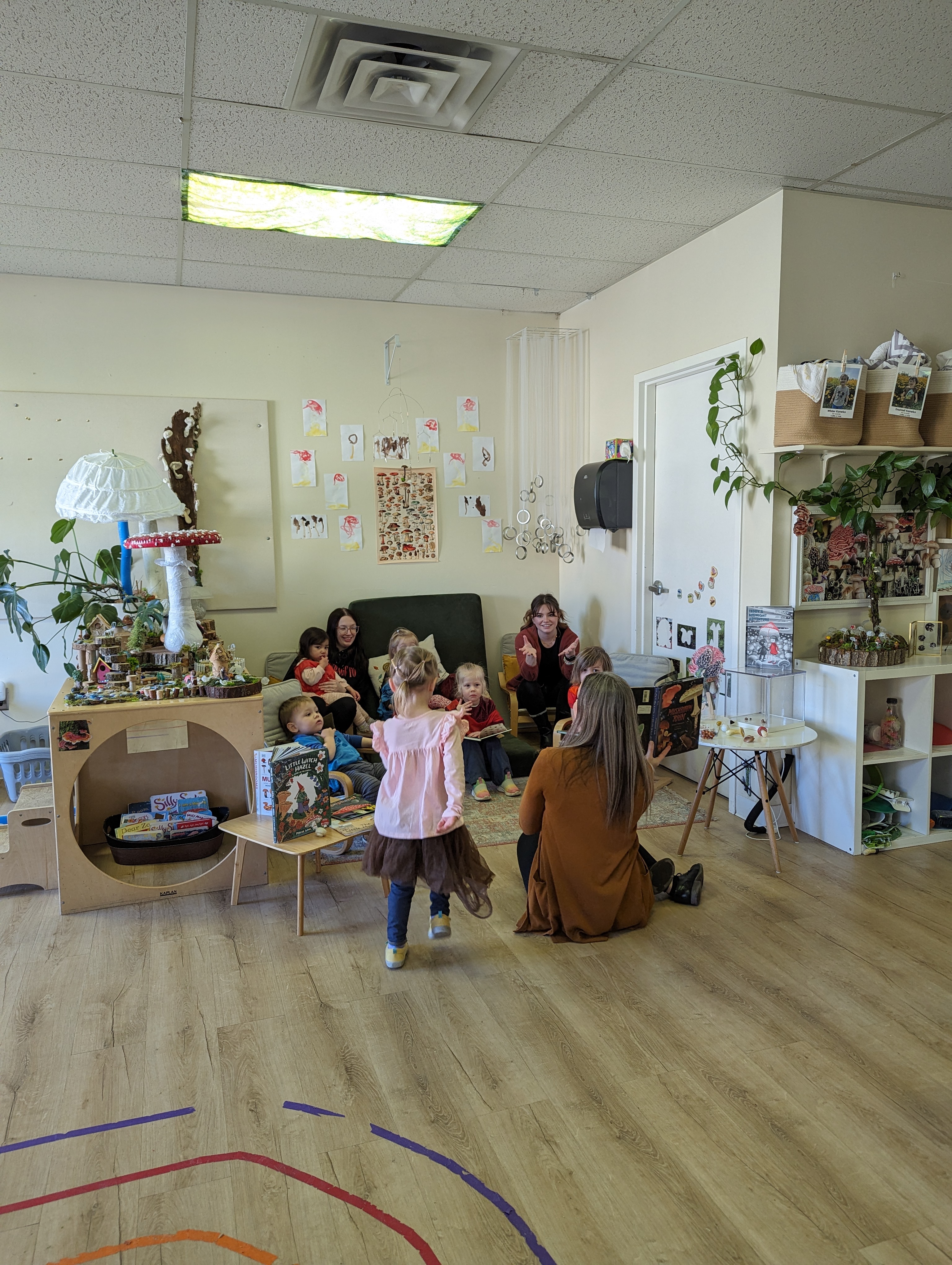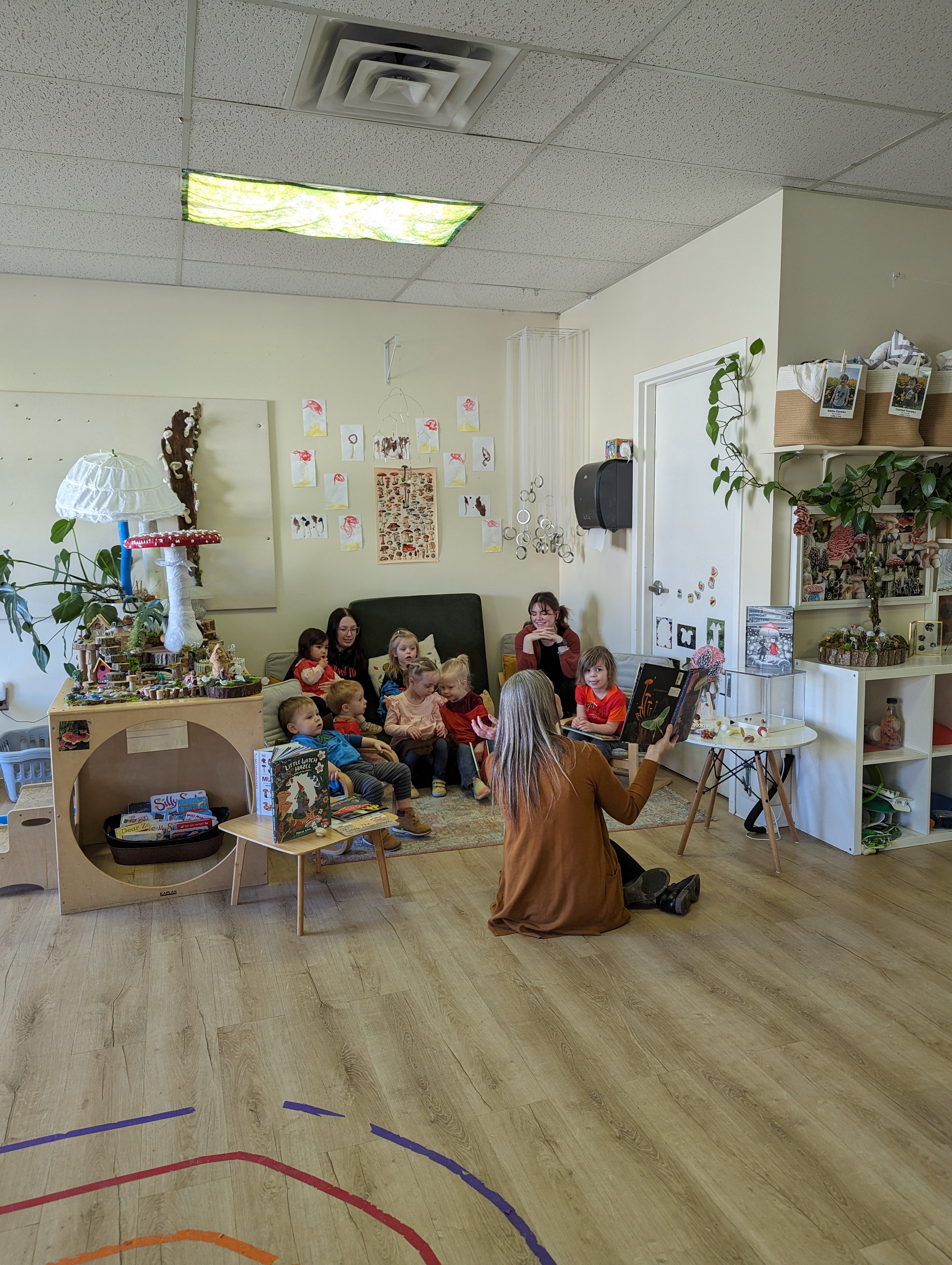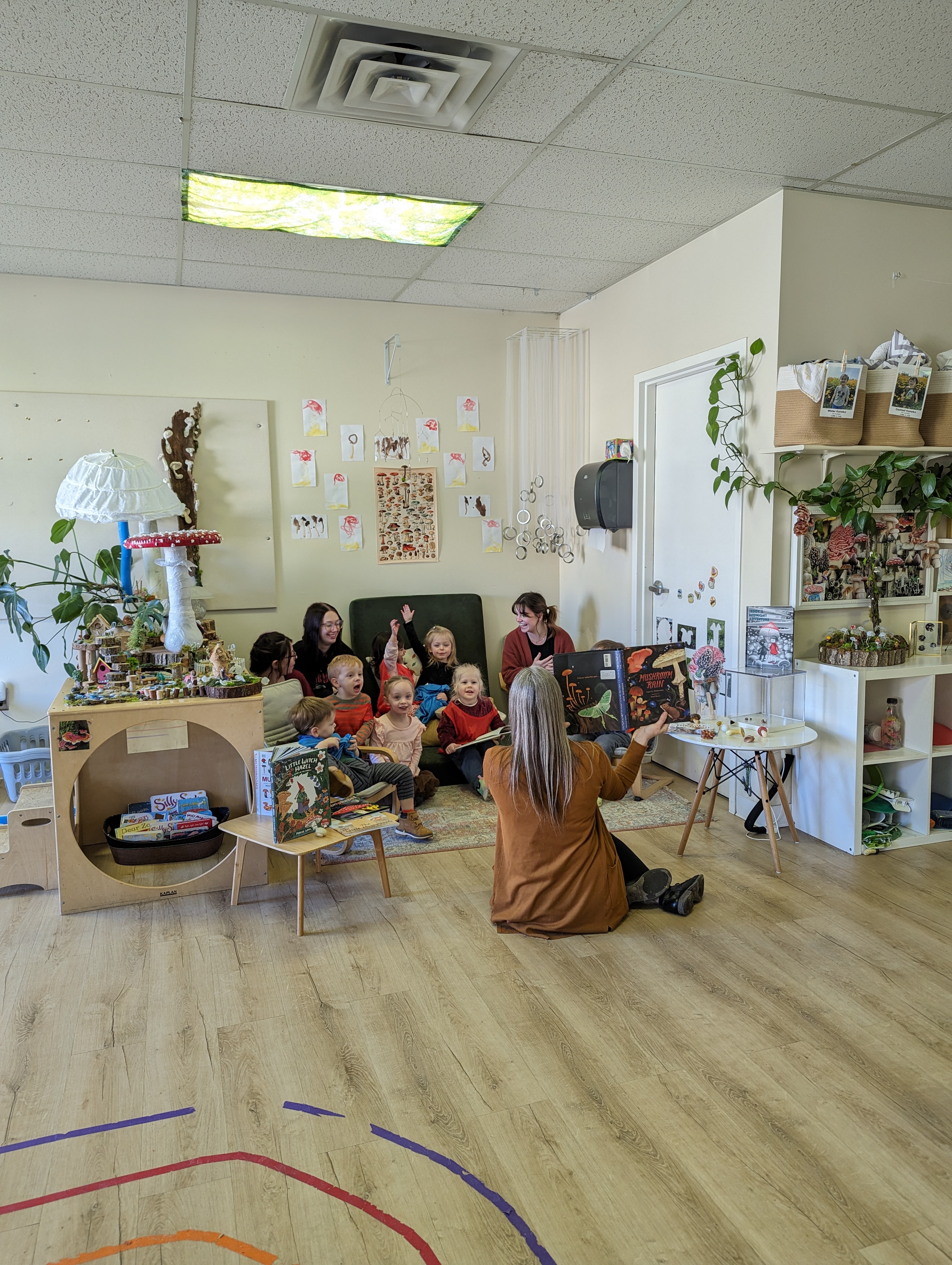
The book that Ms. Tara is reading, Mushroom Rain, was the origin of this study. The children were mesmerized by the colorful pictures and incredible variety of mushrooms. During their walks and outdoor play, they began to recognize different types of mushrooms and connected them with the book.

As the children’s interest in mushrooms grew, more resources were brought in to expand their experience. Encyclopedias, stories about mushrooms, and collections of live fungi were introduced.

Inspired by one of their books, the room was rearranged to make space for a mushroom village. The children collected materials, painted rocks, houses, and little mushroom people. In this way, the children's own work is altering their environment to focus on the study.

The children constructed mushrooms out of toilet paper rolls, molded clay into their favorite varietal, and painted a giant papier-mâché mushroom. Each activity, called a provocation, is open-ended and allows the children the freedom to construct what they want. Children work at their own pace and explore their own unique talents and abilities.

The results of their provocations are proudly displayed so that students see their progress and understand that their creations are important and valued. This builds intrinsic motivation and encourages them to continue learning. Here, we can see children's progress in painting fly agaric and stinkhorn mushrooms.

The emergent study influences the games and activities in the room, too. Here we see cut-outs of different shapes of mushrooms and matching shapes attached to popsicle sticks. When the cut-outs are placed around the room, the children search to find the cut-out that matches each mushroom shape. This simple game combines pattern recognition, focus, and gross motor skill as the children scurry around the room looking for each shape.

Tools such as light tables, display boxes, and microscopes are used to observe mushrooms from different perspectives. The children seek out these tools when they collect a new sample, curious to see how different mushrooms look up close or under light.

Some of the children's art and documentation of their learning is collected to be shared with families and student in other classrooms. This collaboration generates new ideas and spawns new topics for further exploration.

As Avventura finishes their book, we can see how the emergent curriculum has inspired the children to explore, learn, create, and play. By adapting provocations, encouraging exploration, and even modifying the room layout, teachers use emergent curriculum to instill a passion for learning that the children carry with them far beyond the walls of the GREDC.

This page works best in landscape mode!